Residential & commercial service across Ajax and Durham Regioninfo@ajaxmouldremediation.com
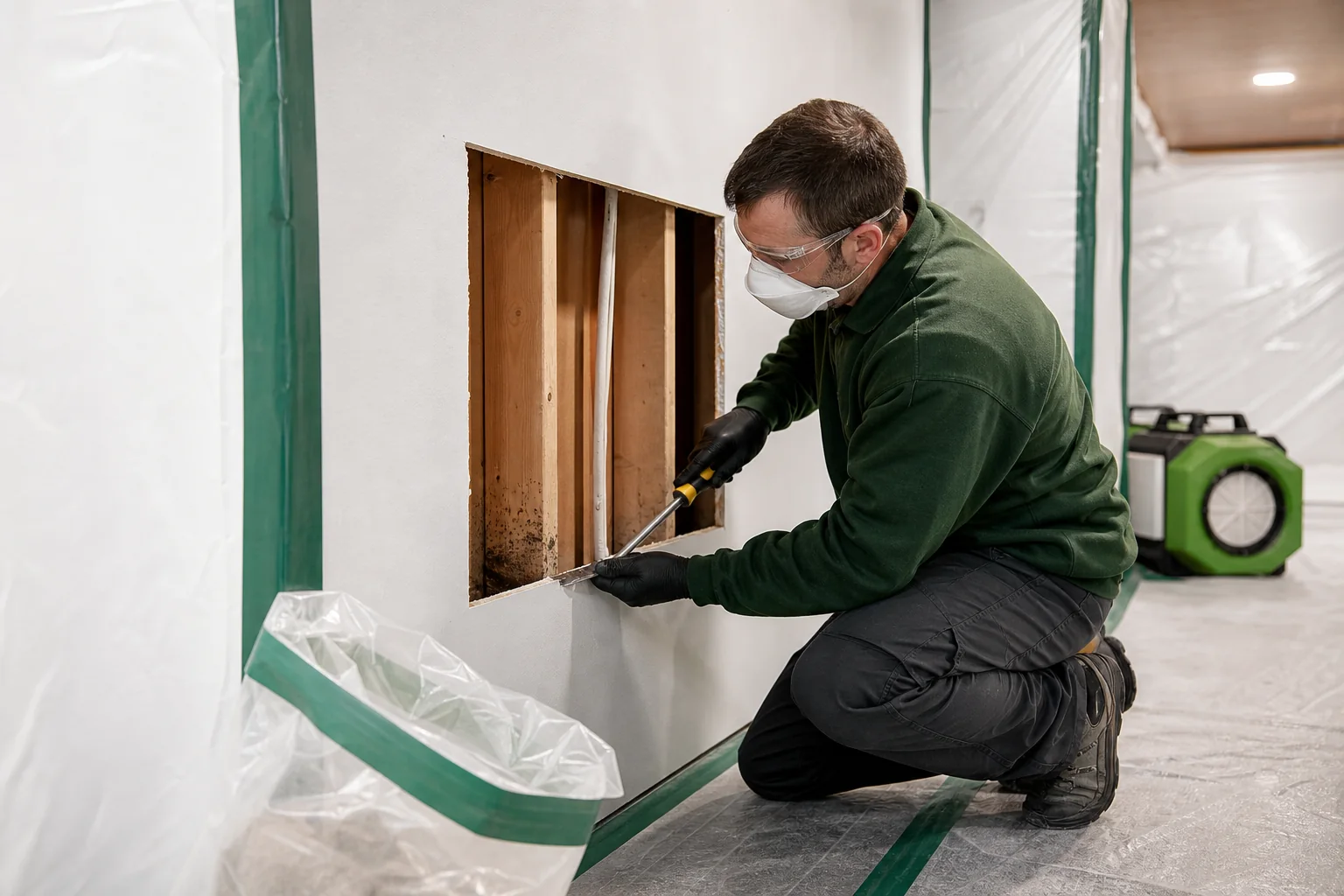
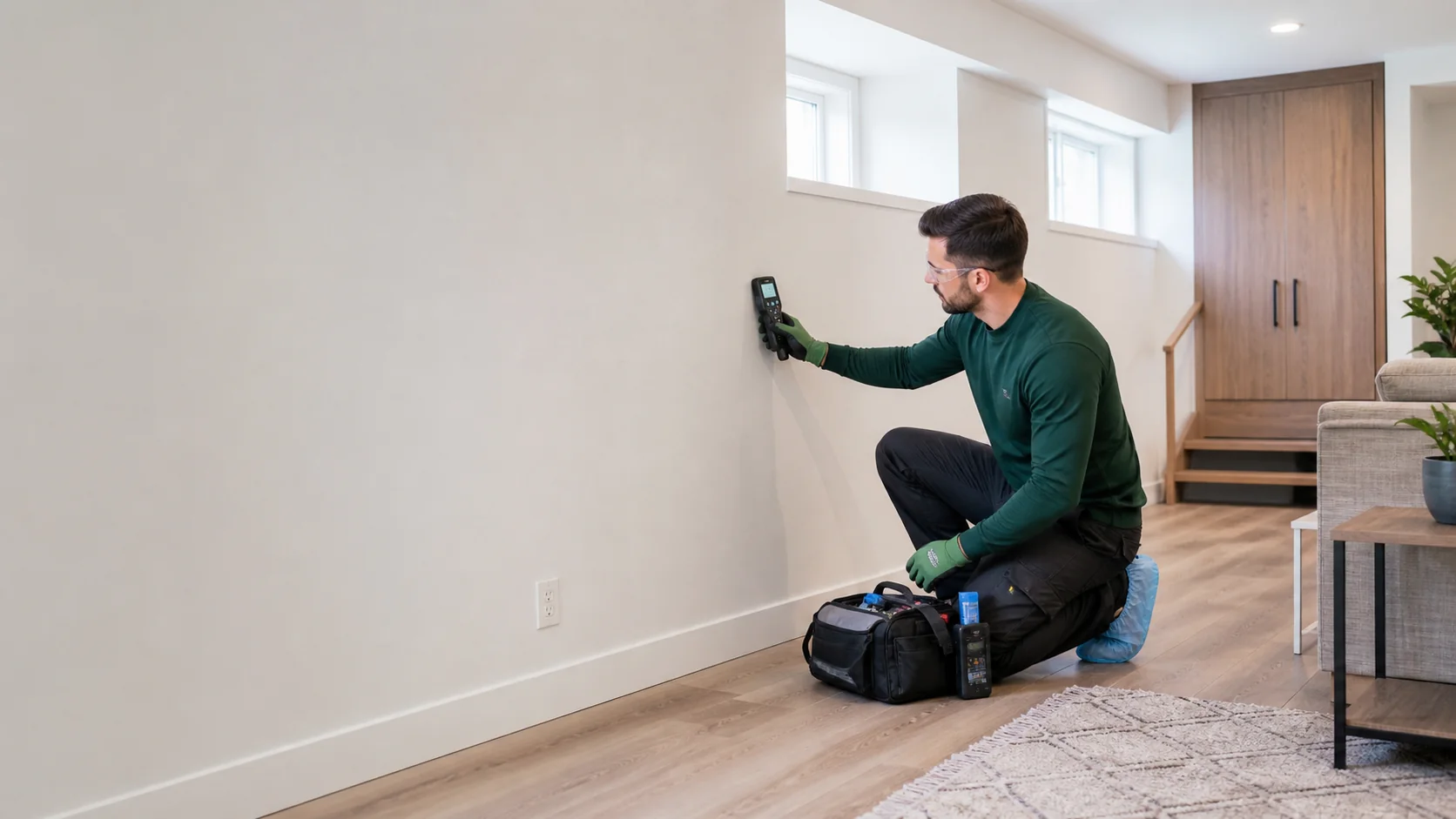
Mould remediation professional checking a basement wall with a moisture meter
Ajax, Ontario mould specialists

A cleaner, drier space starts with the right plan.

Ajax Mould Remediation helps homeowners and businesses find the moisture source, contain affected areas, and remove mould safely. Get clear answers without scare tactics.

Residential & commercial Ajax & Durham Region Clear written scopes
Free, no-pressure quote

Tell us what is happening

We will help you choose the right next step.

By submitting, you agree that we may contact you about this request. No spam.

Controlled work areas Moisture-first solutions Clear next steps
Welcome to Ajax Mould Remediation

Worried about mould in your home or building?

Mould is a sign that moisture and building materials have met for too long. The stain you see may be small, or it may connect to damp drywall, insulation, framing, or roof sheathing nearby. The best first step is a calm assessment of the affected area and the water source.

We provide residential and commercial mould inspection, removal, and prevention support in Ajax, Ontario. Our process is built around three goals: protect clean areas, deal with affected materials, and help correct the condition that allowed growth. That means you receive a practical plan instead of a one-size-fits-all treatment.

Meet Ajax Mould Remediation
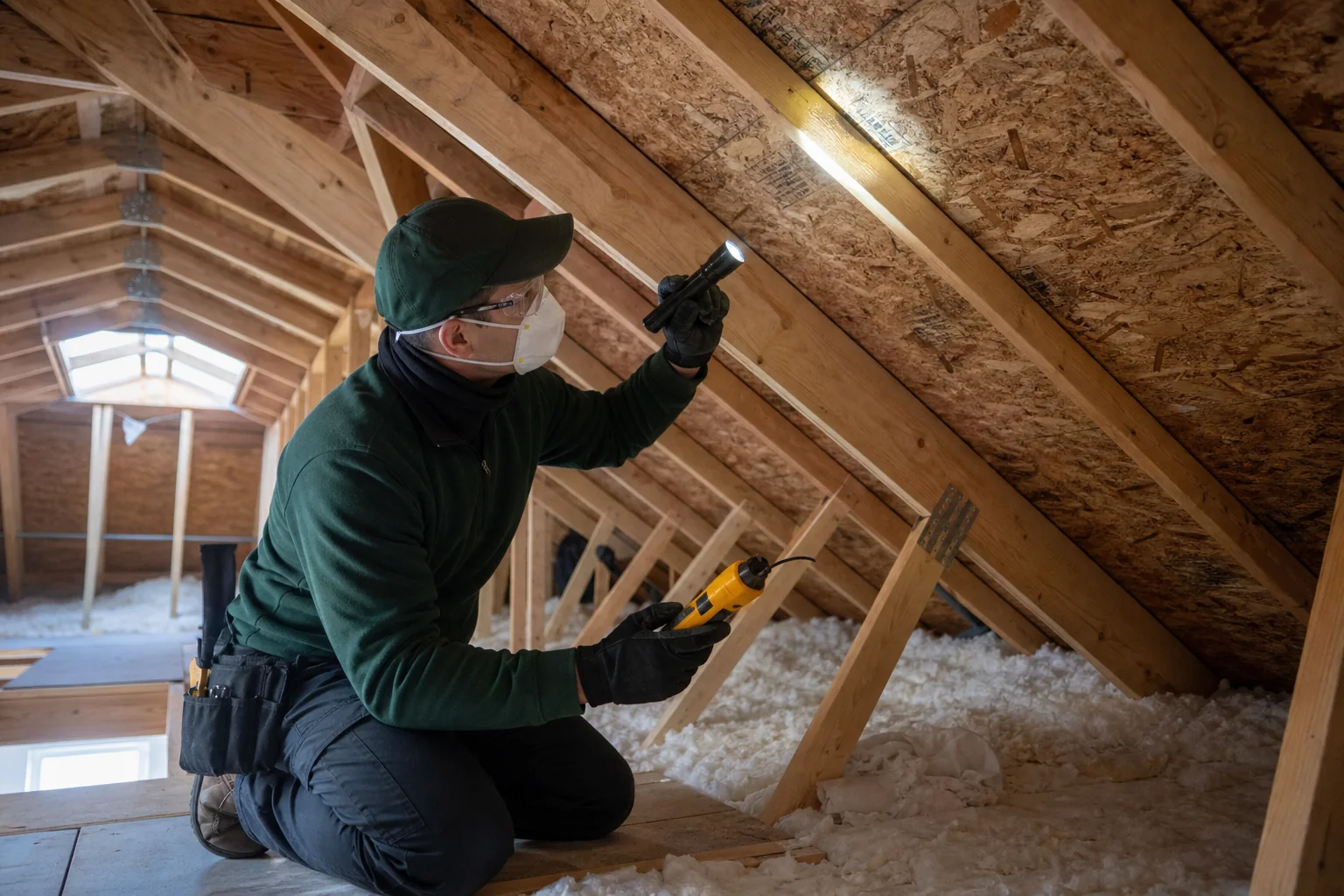
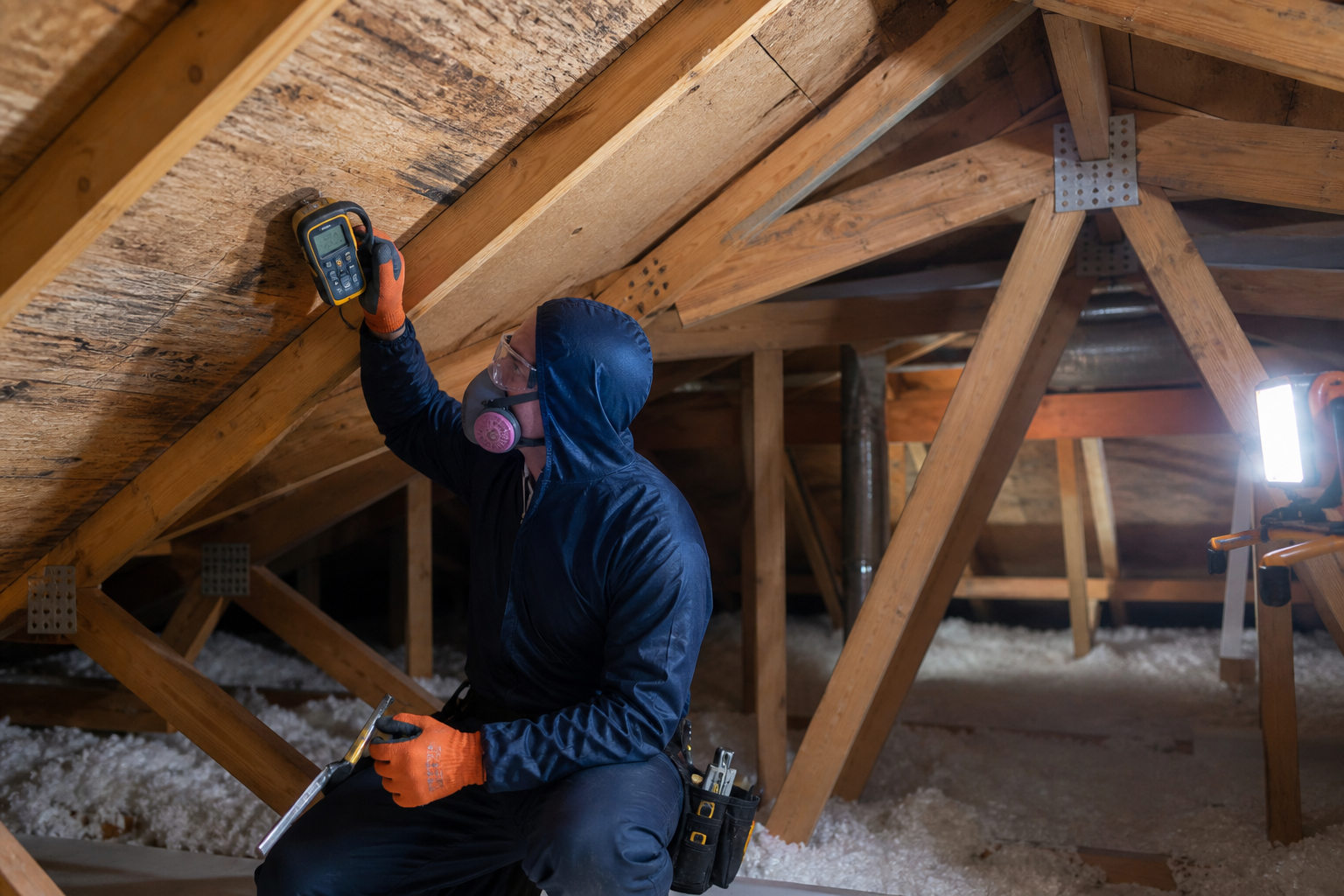
Technician inspecting roof sheathing in an Ajax attic
Find the cause, not just the mark

Why does mould keep coming back?

Cleaning the surface may change how an area looks, but it does not repair a roof leak, stop foundation seepage, redirect an exhaust fan, or lower indoor humidity. Lasting remediation pairs affected-material work with moisture control.

  • Follow the path of water
  • Check nearby and hidden materials
  • Match containment to the work
  • Verify drying before repairs
Learn About Prevention
Simple, documented, controlled

Our four-step remediation process

You will know what happens next and why it matters.

01

Inspect

We review visible conditions, moisture, affected materials, and the building history.

02

Plan

You receive a clear scope for containment, removal, cleaning, drying, and follow-up.

03

Remediate

The work area is controlled while affected materials are handled and suitable surfaces are cleaned.

04

Verify

We complete a detailed visual check and confirm the area is ready for its next step.

Local knowledge matters

Built for Ajax homes and commercial spaces

Ajax sits along Lake Ontario in Durham Region, with a mix of older homes, newer subdivisions, finished basements, retail properties, and industrial buildings. Seasonal humidity, cold surfaces, roof-space air leaks, plumbing failures, and foundation moisture can all create mould-friendly conditions.

We serve Ajax and nearby communities with a building-focused approach. Whether the concern is behind basement drywall, on attic sheathing, under a sink, or inside a commercial unit, the work begins by understanding how moisture reached that area.

Contact Us Today
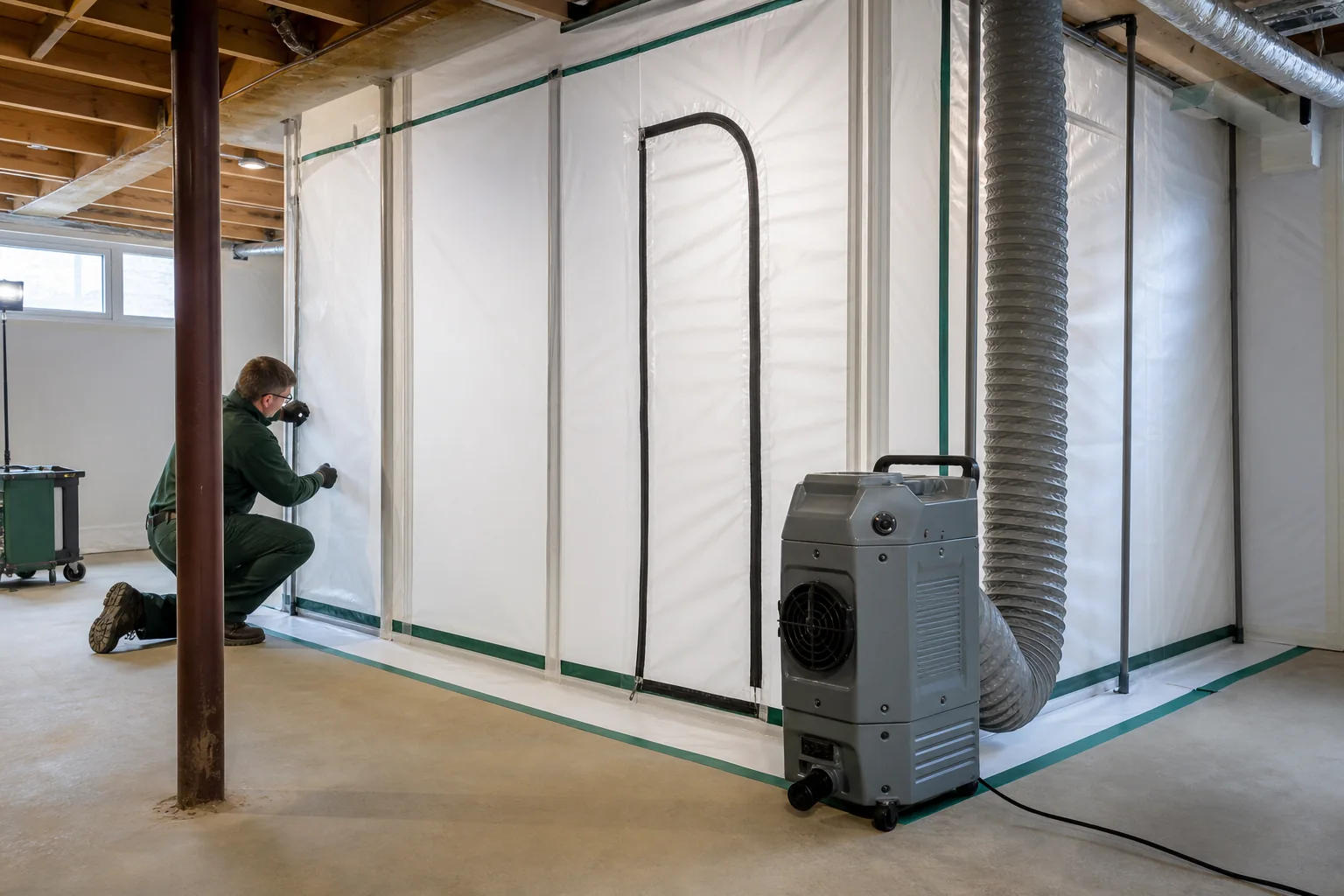
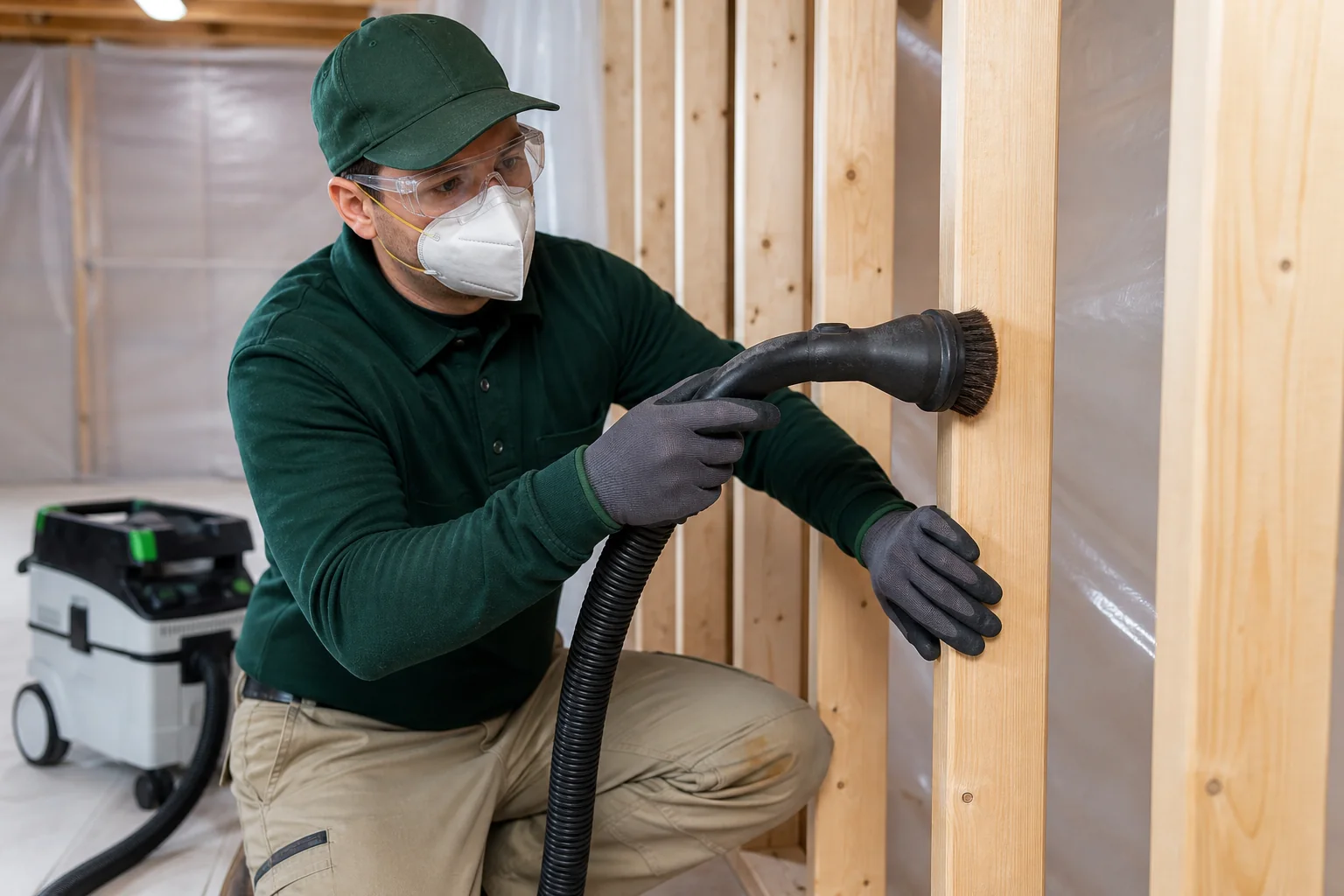
Remediation team preparing a controlled basement work area
Common household moisture problems

What causes mould problems inside Ajax homes?

Mould is not simply a surface-cleaning issue. It develops when a material that can support growth remains damp long enough. The moisture may come from a sudden leak, repeated condensation, humid indoor air, poor drainage, an exterior opening, or water that was never fully dried after an earlier event. Understanding the pattern helps property owners choose a proportionate response and avoid paying for cosmetic work that leaves the cause in place.

A useful assessment connects what can be seen to the way the building works. That means asking when the mark appeared, whether plumbing or weather was involved, which materials changed, how air moves through the area, and whether the condition varies by season. Moisture readings and selective access can help define boundaries without assuming that every wall must be opened. The result should be a practical sequence: stop water entry, establish appropriate controls, remove material that cannot be retained, clean suitable surfaces, dry the assembly, and verify the condition before repairs hide it again.

01

Why does my basement smell musty even when I cannot see mould?

A musty odour can be an early sign that materials are staying damp in a place that is difficult to see. Moisture may be sitting behind finished drywall, below laminate flooring, around a foundation crack, inside stored cardboard, or beneath a stair enclosure. Basements are naturally cooler, so humid summer air can also condense on foundation walls, cold-water pipes, and other cool surfaces. An inspection follows the moisture rather than relying on odour alone. That may include checking the room history, looking for seepage patterns, measuring accessible materials, and reviewing how the space is ventilated or dehumidified. Covering the smell with fragrance does not correct the damp condition that caused it.

02

Why is there mould around windows and exterior walls?

Repeated window condensation usually means warm indoor air is meeting a cold surface. The same process can affect exterior corners, closet walls, rim joists, and areas behind furniture where air movement is limited. High indoor humidity, weak exhaust ventilation, air leakage, thermal bridging, or damaged seals may all contribute. Wiping away surface spotting can improve appearance, but recurrence is likely if condensation continues. Useful next steps include measuring indoor humidity, operating bathroom and kitchen exhaust fans, leaving space for air to circulate, and checking whether insulation or air-sealing defects are keeping the surface unusually cold. Persistent or widespread growth deserves a closer assessment before repainting.

03

Can a small plumbing leak create a larger hidden problem?

Yes. A slow supply-line drip, loose tub connection, refrigerator line, dishwasher leak, or failed toilet seal can wet more material than the visible mark suggests. Water can follow framing, settle beneath cabinets, soak drywall paper, and travel under finished flooring. By the time paint bubbles or a baseboard swells, nearby insulation or wood may have been damp for an extended period. The first priority is to stop the leak safely. The affected area can then be mapped, opened only where justified, and dried based on readings. Replacing the cosmetic finish before the assembly is dry may trap moisture and allow damage to continue out of sight.

04

Why do bathrooms and kitchens develop recurring mould?

Showers, baths, cooking, and dishwashing release substantial water vapour. Problems develop when exhaust fans are undersized, rarely used, clogged, or vented into an attic instead of outdoors. Damp towels, wet grout, poorly sealed fixtures, and cold exterior walls can add local moisture. A practical prevention plan combines source control with routine drying: use exhaust during moisture-producing activities, keep it running long enough to clear humid air, repair failed caulking or plumbing, and clean surfaces that can be safely maintained. Growth that returns quickly, appears beyond the surface, or accompanies soft materials may indicate a hidden leak or ventilation defect rather than a housekeeping issue.

05

What causes mould on attic roof sheathing?

Attic growth often reflects moisture moving from the living space into the roof cavity. Warm air can leak through attic hatches, pot lights, wiring penetrations, wall tops, and gaps around ducts. Bathroom or kitchen exhaust that terminates in the attic adds moisture directly. Roof leaks, wind-driven snow, compressed insulation, and blocked soffit ventilation can produce similar symptoms. The staining pattern, insulation condition, duct routing, roof history, and moisture readings help distinguish the cause. Cleaning the sheathing without correcting air leakage, exhaust routing, ventilation, or roof entry can lead to another cycle. Attic remediation should therefore be coordinated with the building repairs that keep the roof structure dry.

06

What should I do after a flood, sewer backup, or major water loss?

Begin with safety. Avoid areas with electrical hazards, unstable materials, contaminated water, or active structural damage, and contact the appropriate emergency or restoration service. Once the source is controlled, document the loss and speak with your insurer when coverage may apply. Wet materials should be assessed promptly because water can move into wall cavities, insulation, subfloors, and adjoining rooms. The water source and contamination category affect what can be cleaned and what should be removed. Drying equipment should be selected and monitored for the actual space. Rebuilding should wait until retained materials are clean, appropriately treated, and dry enough for the planned finish system.

Symptoms, warning signs, and concerns

How can mould or excess moisture affect a household?

A building can show physical warning signs, while occupants may report health symptoms that deserve attention. Neither should be used to self-diagnose the other. The responsible approach is to have building conditions assessed and health concerns discussed with a qualified healthcare professional.

Health information: Health Canada’s mould guidance.

Request an Assessment

Visible changes

Watch for spotting, fuzzy growth, staining, peeling coatings, warped trim, swollen drywall, darkened roof sheathing, or repeated marks that return after cleaning. Colour alone cannot identify a mould species or determine the seriousness of the building condition.

Odour and dampness

A persistent earthy or musty smell, clammy surfaces, condensation, damp stored belongings, or a room that feels humid may justify investigating hidden moisture. The absence of an odour does not prove that an assembly is dry.

Occupant symptoms

Health Canada reports that people in damp or mouldy homes are more likely to experience eye, nose, and throat irritation, coughing, phlegm buildup, wheezing, shortness of breath, worsening asthma symptoms, or other allergic reactions. These symptoms are not specific to mould and require medical assessment rather than a diagnosis from a building inspection.

People who may be more susceptible

Children, older adults, people with asthma or severe allergies, and people with certain medical conditions may be more sensitive to damp indoor environments. Anyone who believes a health problem may be related to mould should speak with a healthcare professional. A remediation company evaluates the building; it does not provide medical advice.

When testing helps

Visible growth and a known water source do not always require broad air sampling before action. Testing is most useful when it answers a defined question—for example, when growth may be hidden, documentation is required, parties disagree about conditions, or independent post-remediation verification is specified.

When to call a professional

Ask for professional advice when the affected area is extensive, keeps returning, involves hidden cavities or HVAC equipment, follows contaminated water, requires demolition, or affects a property with vulnerable occupants. A written scope should explain containment, material decisions, cleaning, drying, disposal, and verification.

Common questions

What property owners ask first

What is the difference between mould removal and remediation?+

Removal describes dealing with affected material. Remediation is the wider process: assess the area, control spread, handle affected materials, clean, dry, and address the moisture condition that caused growth.

Do I need to test visible mould?+

Not always. When growth and water damage are clear, a site assessment may provide enough information to plan work. Testing is useful when it answers a specific question or supports verification.

Can I clean mould myself?+

Small, limited surface growth may be manageable for some property owners after the moisture source is corrected. Large areas, hidden growth, repeated problems, contaminated water, or vulnerable occupants call for professional advice.

How long does remediation take?+

Timing depends on area size, materials, access, drying, and moisture correction. A small contained project may move quickly; complex or multi-area work takes longer. Your scope should explain the expected sequence.

Does bleach prevent mould from returning?+

A product alone does not prevent recurrence. The important step is keeping materials dry by correcting leaks, condensation, ventilation, or humidity issues.

Do not let moisture decide what happens next

Get a clear mould remediation plan.

Tell us what you see and where it is. We will help you choose the right first step.

Request an Estimate
Contact Us Today